
An applicant tracking system is a database with a parser attached. Knowing the four steps it runs explains almost every piece of advice about CV formatting, and stops you from optimising for a machine that is not making the decision.
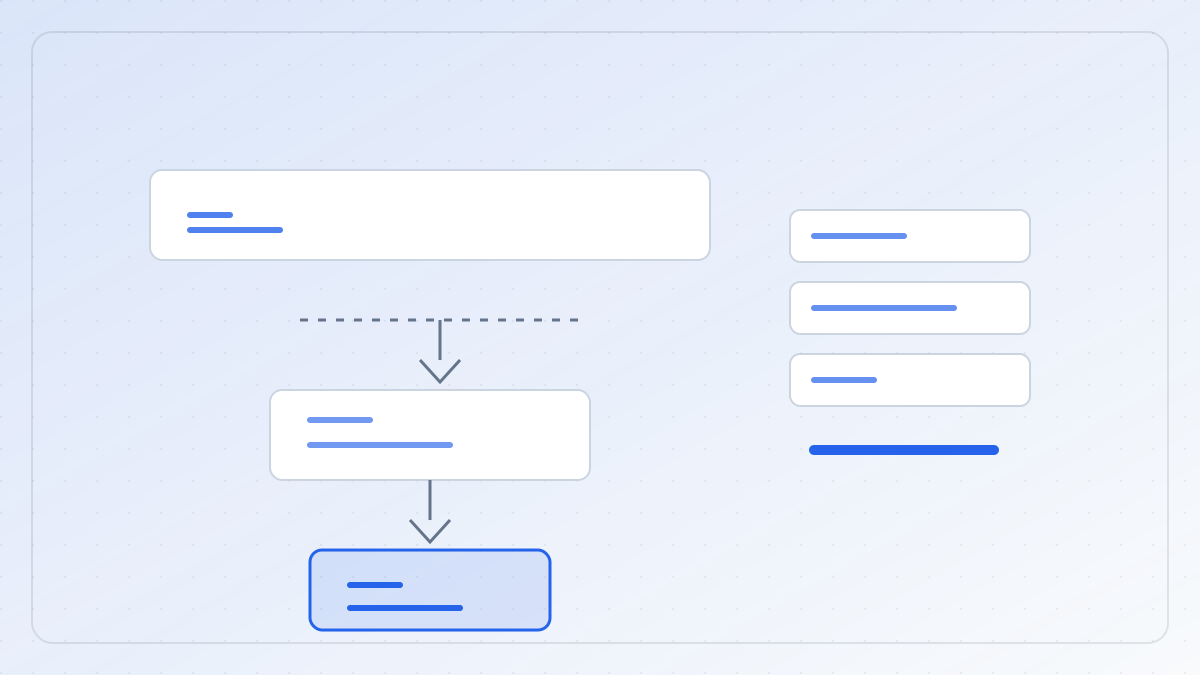
The four steps
1. Store. Your file is attached to your application record.
2. Extract. The system pulls the text out of the file. A PDF made of real text extracts well; a scan or an image of text extracts as nothing.
3. Guess structure. It looks for headings, dates, job titles and contact details, and turns the text into fields: employer, role, start, end, education.
4. Search and filter. A recruiter searches for terms, filters by location or years, and reads the records that survive.
That is the whole machine. It is a filing cabinet with a search box, not a judge.
Where a good CV gets lost
Extraction. Text baked into an image — a scan, a screenshot, a design tool's flattened export — cannot be read. Nothing downstream can recover it.
Structure. Tables, text boxes, sidebars and multi-column layouts can arrive out of order, so the dates land in one block and the employers in another. The record is still there; it is just wrong.
Headings. A section with a heading the parser does not recognise may be filed under the section above it.
Contact details in a graphic. An email inside a header image is an email the system never sees.
None of these is fatal by itself. Together they are why a well-designed CV can arrive as a name and a list of unassigned dates.
What an ATS does not do
- It does not reject you. Recruiters set filters; the software obeys.
- It does not read for quality, tone or potential.
- It does not have one universal scoring model. Systems differ, configurations differ, and the same CV can rank differently at two employers.
- It does not replace the human. In most processes a person still opens the record, often after a search.
What to do about it
- Send real text, not a picture of text. Select a line with the mouse: if you cannot highlight it, a parser cannot read it.
- Use one column, or a layout whose reading order survives being flattened.
- Use ordinary headings, one date format, and contact details in the body.
- Put the advert's vocabulary where it is true, and prove each claim in a bullet.
A useful habit before applying anywhere: open your own PDF on a phone and read the first screen as a stranger would. If the name, the last role and one result are not there, the document is arranging its evidence for a reader who no longer exists.
Next step
Run your file through the ATS resume checker: it extracts the text the way parsing software roughly does, lists the layout and keyword issues it finds, and names the checks it could not run so an unchecked item is never mistaken for a pass. If the extracted text looks scrambled, rebuild the layout in the CV builder rather than rewriting the content. For the searchable-terms side of this, see ATS keywords.