
A first-job cover letter fails for one reason, usually: it is written about wanting a job rather than about being able to do one. The fix is not confidence; it is a single concrete example.
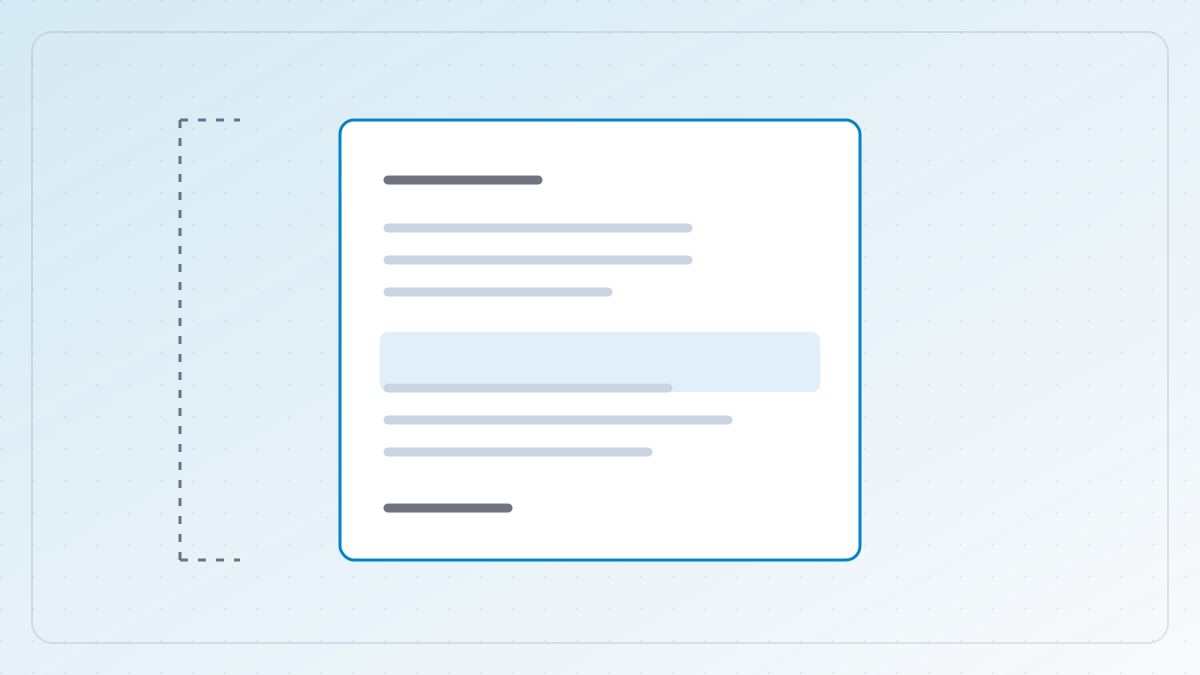
The shape that works
Four sentences, in this order:
1. The role and where you saw it.
2. One thing you have done that maps to what the advert asks for.
3. What that produced — a result, a number, or what it enabled.
4. A close that asks for a conversation.
Then a greeting above and your name below. That is a complete letter, and it is shorter than most people expect.
Worked example: a graduate applying for a junior analyst role
> Dear Hiring Manager,
>
> I am applying for the Junior Data Analyst role advertised on your careers page. For my final-year project I cleaned and analysed a survey of 1,200 responses in R, then presented three findings to a panel that included two external examiners. The analysis changed how the department words its own student survey. I would welcome the chance to talk about how I could do the same work with your customer data.
>
> Yours faithfully,
> A. Candidate
Why it works: the claim is checkable, the number is real, and the last sentence points at their problem rather than at the applicant's hopes.
Worked example: a school leaver applying for a retail role
> Dear Ms Perera,
>
> I would like to apply for the weekend Sales Assistant role at your Galle Road store. I have worked the till and stock room at a family shop for two years, including stock counts at month end, and I trained two new staff on the till last summer. Weekends and school holidays suit me, and I can start immediately. I would be glad to come in and meet the team.
>
> Yours sincerely,
> A. Candidate
Why it works: it names the specific store, gives evidence a manager recognises, and answers the two unspoken questions — availability and reliability — without being asked.
What to use when you have nothing formal
- Coursework and final projects, especially anything with a result.
- Part-time, family or casual work. Reliability is a skill; say what you did with it.
- Volunteering with a named responsibility, not just attendance.
- Anything you ran yourself: a society, a team, an online shop, a tournament.
- A skill you can demonstrate rather than assert: a language at a stated level, a tool you have used for a real task.
What to leave out
- "I am a hard-working individual with excellent communication skills."
- A paragraph on how much you want to work for them, with no evidence.
- Apology for lack of experience. State what you have and stop.
- School grades already listed on the CV.
One page, but usually shorter
A first-job letter is often 150 to 250 words. Short is not rude; vague is. If you find yourself on a second page, the letter is carrying content that belongs in the CV.
Next step
Draft it in the cover letter builder, then check the CV half of the application with the ATS resume checker — a strong letter cannot rescue a CV that a parser cannot read. If you are still shaping the CV itself, our guide to a first CV with no experience covers that side.